
Introduction
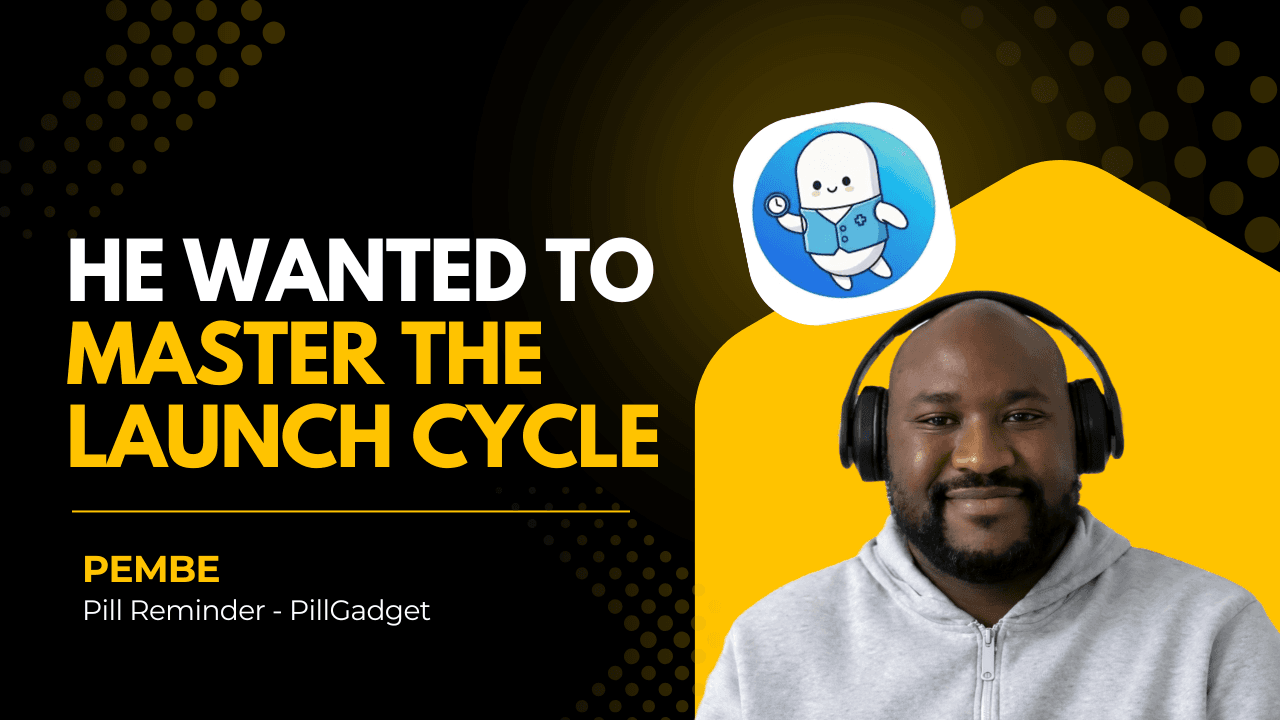
Meet Pembe
You don't have an idea? Perfect.
Most people think that's a problem.
They show up to the Incubator apologizing: "I don't know exactly what I want to build yet..."
But here's the truth: coming in without an idea is often better than coming in with the wrong one.
Pembe didn't have an idea.
What he had was something more valuable: he was really data driven. He wanted to see what actually works, not what he hoped might work.
He was calling in from South Africa, working as a software developer at BMW - part of a team of 2,000 developers building manufacturing software. He'd been following my React Native content for a while and he could code. He knew the tools.
But he'd never shipped his own app.
"I've always wanted to be an entrepreneur," he told me. "I want to build my own thing."
The problem? "I never had time to sit down and actually work on a side project."
"Is it time or priority?" I asked.
He paused. "Yeah. Because usually when I get home I'll be quite tired and then I start watching Netflix or something."
There it was. Not a time problem - a priority problem.
And not an idea problem either. A focus problem.
What caught the attention
"I want to try it out," he said. "I want a process that works, you know, like something that I can easily repeat."
Not "I want to build THE app."
But "I want to learn the process."
He was comfortable with React Native - he had built an Airbnb-style marketplace before with some developers from India. Pembe was technically capablem but just needed direction.
And he was fine not having an idea yet. Actually, he preferred it that way 😁
The problem: no idea (and why that's good)
When we started, he had no idea.
Zero.
And he knew that was actually smart.
He didn't want to waste six months building something nobody wanted just because it seemed cool.
This is the trap most developers fall into.
They think of something they wish existed, assume others want it too, and build for a year before discovering the market doesn't care.
Pembe was skipping that entire painful cycle.
"If you had ideas, I'm more interested in doing those," he said, "because if I start thinking something now I don't have the data behind what I want."
He was basically saying: I trust data more than my own assumptions. Show me what's already working, and I'll build a better version.
That's the mindset that wins.
Why Pembe Joined
Pembe understood what he needed: a repeatable process.
"My goal is to make as many apps as possible like in a repeatable way," he told me.
He needed someone to show him the full cycle: ideation, building, launching, marketing.
The Incubator gave him three things:
- Pre-researched ideas with actual data behind them
- Weekly pushback to keep him from overthinking
- A clear 10-week deadline to ship something real
No more research paralysis. Just pick, build, ship, learn.
Finding the idea: Pill Reminder
I pulled up my list of pre-researched ideas. Grocery list, pill reminder, sleep tracker, family calendar.
"Pill reminder," I said. "Keywords look good. 39-40 popularity. This is in the health space, so people are more ready to pay."
We searched the App Store together. The top app for "pill reminder" was from 2014. The UI looked dated. Screenshots were bad.
Pembe saw the opportunity. Old competitors. Clear demand. Simple feature set.
Done. Week one, idea locked in.
Building the core: keep it simple
Pembe moved fast. First call, we mapped out the MVP:
Core features:
- Create a pill reminder (name, dosage, time, frequency)
- View reminders on the home screen
- Take action when the notification appears (take, snooze, skip)
That's it. No medication database. No AI suggestions. No caregiver mode.
"Just pill name, maybe a note, and the time - how often and when you have to take it. That's it."
He listened and kept moving.
The UI: making it feel good
A few weeks in, Pembe showed me his progress. The app looked clean. Really clean.
He'd used the calendar component I recommended - React Native Calendars. Seven days at the top, dots showing when pills were taken. Clean date navigation.
But he'd also added something I didn't expect: gamification.
Whenever you take a pill, they earn little points: "I saw that many apps that were successful have some bit of gamification in it."
Streaks, achievements, motivational messages when you take your medication.
"I want to focus on the user behavior," he said. "That's what I found is one of the angles where the other current apps are not doing. They just allow you to take the medication and then that's it."
He was targeting people on chronic medication (diabetics, for example) who needed encouragement to build a habit.
The app wasn't just functional - it felt supportive.
The Apple rejection loop
Then came the hard part: getting past Apple review.
"Oh man, it was a struggle," Pembe told the group later.
Apple was rejecting because of the paywall from Revenue Cat
Multiple rejections. Multiple builds. Each time waiting for review, adjusting, resubmitting.
Finally, on a Saturday, it went through.
"I was quite shocked they were doing reviews on Saturday," he laughed.
The app was live.
Why you need other founders looking at your work
First analytics check: 28 product page views. Zero downloads yet.
During the group call, Frank noticed something.
The app title was "Pill Gadget" with "Medication Reminder" only in the subtitle. The primary keyword—pill reminder—wasn't in the title at all.
That's where ASO actually happens. The title matters way more than the subtitle, and the keyword needs to be at the beginning, not buried at the end.
Pembe had assumed the subtitle would be enough.
He was wrong.
Another submission just to fix the title.
The vitamin pivot (Unexpected Insight)
The group catches what you miss.
In the group session other founder told us that he used to work at a vitamin company that did $700 million a year. People who buy vitamins have disposable income - average order value $200 per person. They forget to take them, need reminders.
Then Saul jumped in. He takes vitamins daily. His biggest pain? Reordering. If an app could track his intake and just reorder automatically, he'd pay for that.
Pembe's pill reminder app suddenly had a second market he hadn't considered.
The same app, different positioning - vitamins instead of medication - could unlock a completely different revenue stream.
The room joked about him becoming the vitamin king. 👑
What Pembe Learned
By the end of the Incubator, Pembe had shipped his first app. It was live on the App Store. But more importantly, he'd learned the process:
1. Data beats guessing. He didn't start with his own idea. He started with search volume and competition analysis.
2. Simple wins. No medication API, no caregiver mode. Just core features that worked.
3. UI matters. Clean design and thoughtful UX (gamification, streaks, encouragement) set his app apart from 2014-era competitors.
4. Apple will reject you. Multiple times, for weird reasons. Just keep fixing and resubmitting.
5. The app you build might not be the app people want. Pill reminder for chronic illness? Yes. Vitamin tracker for aspirational health? Also yes. Same code, different angle.
Where Pembe Is Now
Pembe's app PillGadget is live.
The first downloads are trickling in.
And now he knows: pick an idea with data, build it simple, ship it fast, listen to users, adjust.
"My goal is to make as many apps as possible in a repeatable way," he told me on day one.
Now he has the process to do exactly that.